April 2026: When AI Moved from Experimentation to Operational Reality
Without hyperbole: April 2026 will be remembered as an inflection point. Not because one breakthrough model emerged, but because the entire ecosystem shifted toward something that previously seemed out of reach: autonomous, reliable agentic systems running in production.
Mythos: When Safety Stops Innovation
Anthropic made an unexpected move on April 7, 2026. Instead of releasing Claude Mythos Preview to everyone, it restricted access to a small group of partners as part of Project Glasswing, a defensive cybersecurity initiative[1]. The launch partners include Amazon Web Services, Apple, Broadcom, Cisco, CrowdStrike, Google, JPMorganChase, the Linux Foundation, Microsoft, NVIDIA, and Palo Alto Networks[1].

What does this signal? We've moved from "Can AI do dangerous things?" to "How do we safely let AI do dangerous things when the stakes are this high?"
According to Anthropic, Mythos Preview has already found thousands of high-severity vulnerabilities, including in major operating systems and web browsers[1]. The company's own assessment is blunt: AI models "can surpass all but the most skilled humans at finding and exploiting software vulnerabilities"[1].
The fact that Anthropic itself chose to restrict distribution tells us where we are in the maturation curve.
Operational Reality: Three Frontier Models in Five Weeks
Historically, one breakthrough model ships every few months, dominates conferences, and competitors spend months catching up.
Not in 2026. Between early February and early March, three frontier models arrived:
Claude Opus 4.6 (Anthropic, February 5, 2026)[2]:
- 1M token context window (beta)
- 128K output tokens
- Top score on GDPval-AA, an evaluation of economically valuable knowledge work
- Highest score on Terminal-Bench 2.0 at launch
Gemini 3.1 Pro Preview (Google DeepMind, February 19, 2026)[3]:
- 1M token context window
- 77.1% on ARC-AGI-2, more than double Gemini 3 Pro's score
- New thinking-level controls for balancing cost and quality
GPT-5.4 (OpenAI, March 5, 2026)[4]:
- Standard, Thinking, and Pro variants
- 1M token context window
- Native computer use for multi-step agentic workflows
What matters: these are not marginal improvements. Each represents a qualitative jump, and together they redraw the competitive landscape.
Agentic AI: From Hype to Reality
If 2025 was about talking about agents, 2026 is about deploying them. The difference is fundamental.
Knowledge Graphs as Foundation
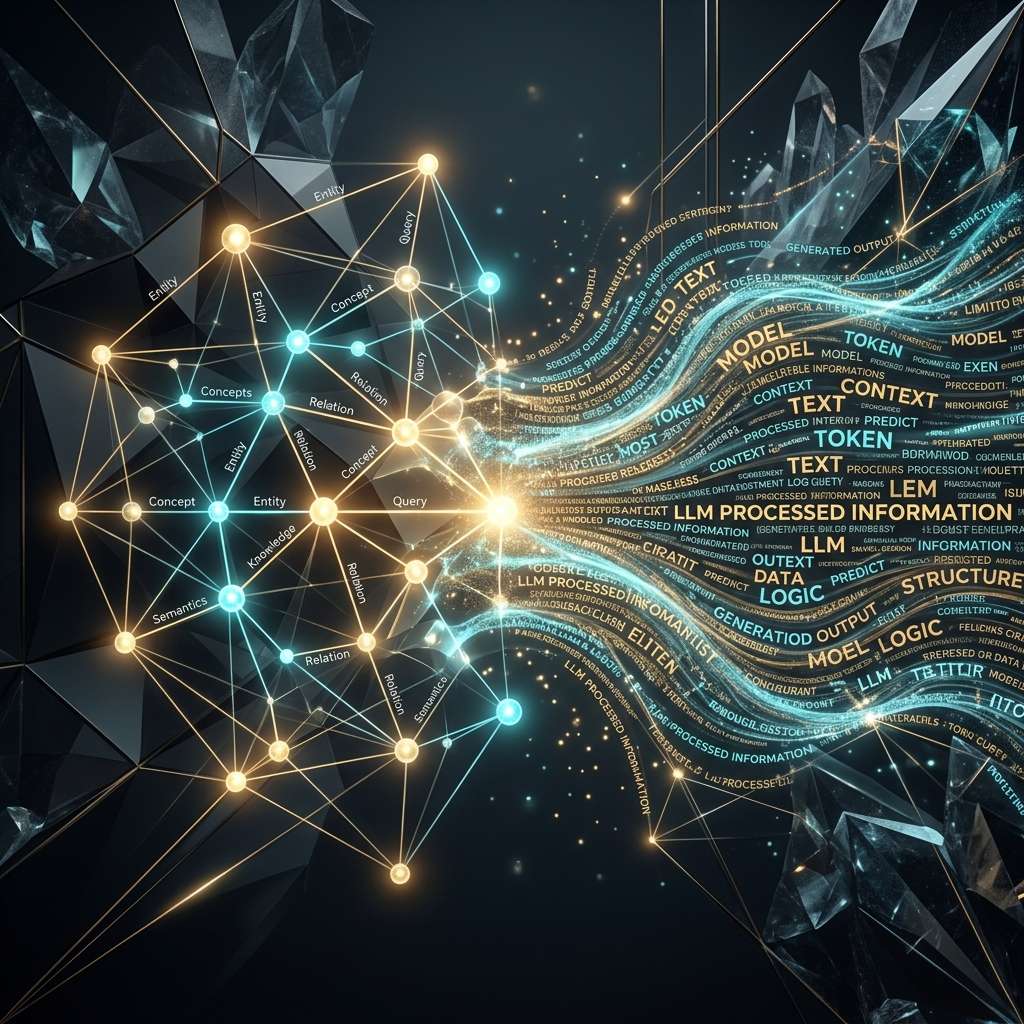
One trend gets less attention than model launches: knowledge graphs are becoming the backbone of reliable agents. Beam AI describes how a central knowledge graph lets specialized agents collaborate and gives them traceable decision paths and audit trails[5].
Reason: LLMs without structured knowledge hallucinate. Multi-agent systems without relational understanding produce confident, elaborate errors.
But LLM + knowledge graph + agentic reasoning? That's a system that:
- Understands business context
- Tracks dependencies between decisions
- Can say "I don't know" instead of fabricating
- Creates auditable decision paths
Hallucinations: A Problem That Refuses to Die
Years after ChatGPT, hallucinations remain a fundamental problem: LLMs confidently state things they don't actually know.
The solution doesn't exist inside a classical LLM alone. It exists in systems that combine LLMs with knowledge graphs, factual anchors, and human oversight.
Three Business Implications for Q2 2026
-
Agents are becoming base infrastructure, not an option. Organizations without an agentic strategy risk falling behind.
-
Security and governance are operational costs. Project Glasswing isn't an academic exercise. It's a signal that unrestricted access to the most powerful models carries real risk[1].
-
Knowledge graphs are essential. Multi-agent systems without structured knowledge quickly lose trust[5].
April 2026 won't be remembered as "the month of a new model," but as "the month AI entered the factory floor."
Sources
- Project Glasswing – Anthropic (April 7, 2026)
- Introducing Claude Opus 4.6 – Anthropic (February 5, 2026)
- Google rolls out Gemini 3.1 Pro preview – TechInformed
- OpenAI launches GPT-5.4 with Pro and Thinking versions – TechCrunch (March 5, 2026)
- 5 Ways Knowledge Graphs Are Quietly Reshaping AI Workflows in 2026 – Beam AI (March 2, 2026)
Comments
Comments are powered by Cusdis. The widget only loads after you click.