From Copilot to Agent: The Joy Paradox and the New Era of AI in 2026
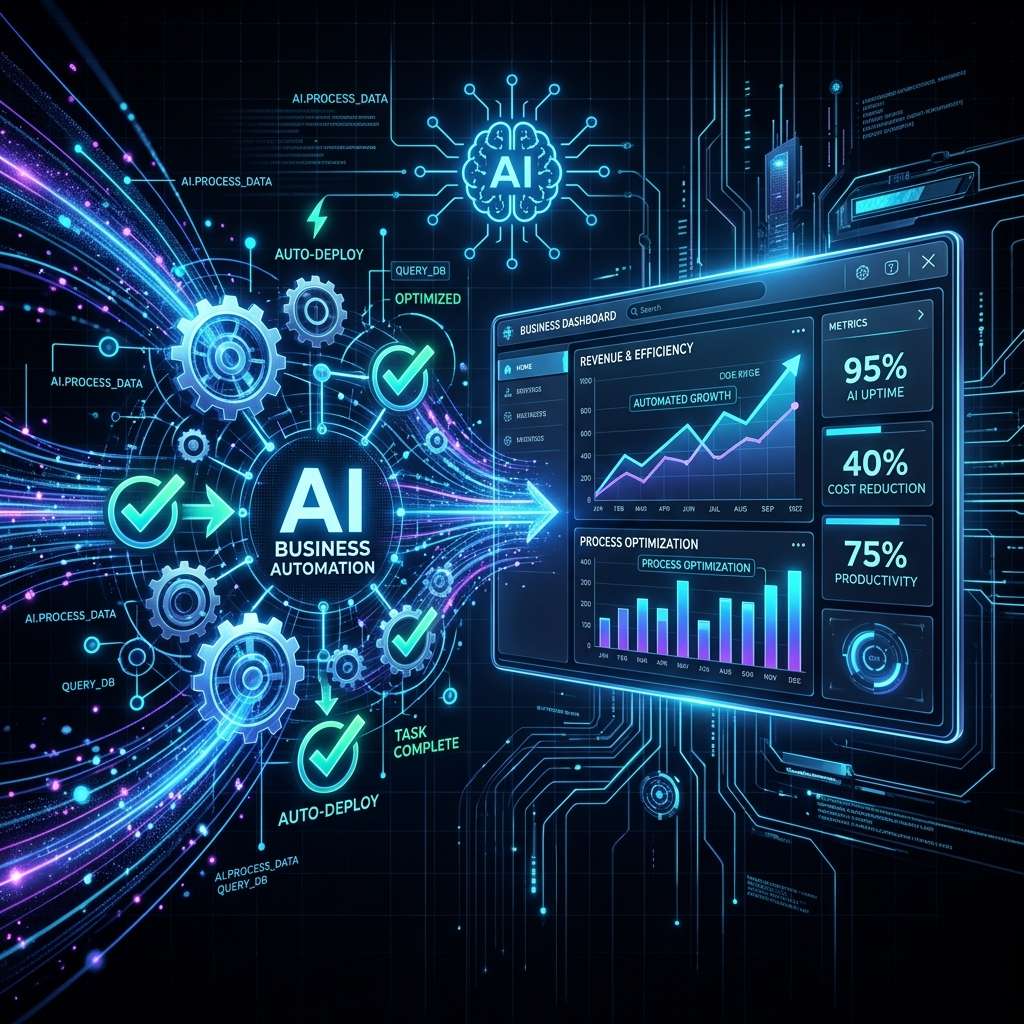
We have officially entered a phase where artificial intelligence is no longer just a novelty tool for writing emails faster. The monumental shift defining 2026 is the transition from micro-automation to full-fledged agentic workflows. As highlighted by the Stanford AI Index, enterprise adoption of AI systems is no longer an experimental phase, but a hard operational reality. However, this structural evolution has introduced an unexpected, entirely new challenge for both employees and managers. This isn't just about deploying yet another SaaS tool; it's about fundamentally transforming how we work, manage our time, and handle increasing cognitive load.
The Dawn of "Agentic Commerce" and Autonomy in B2B
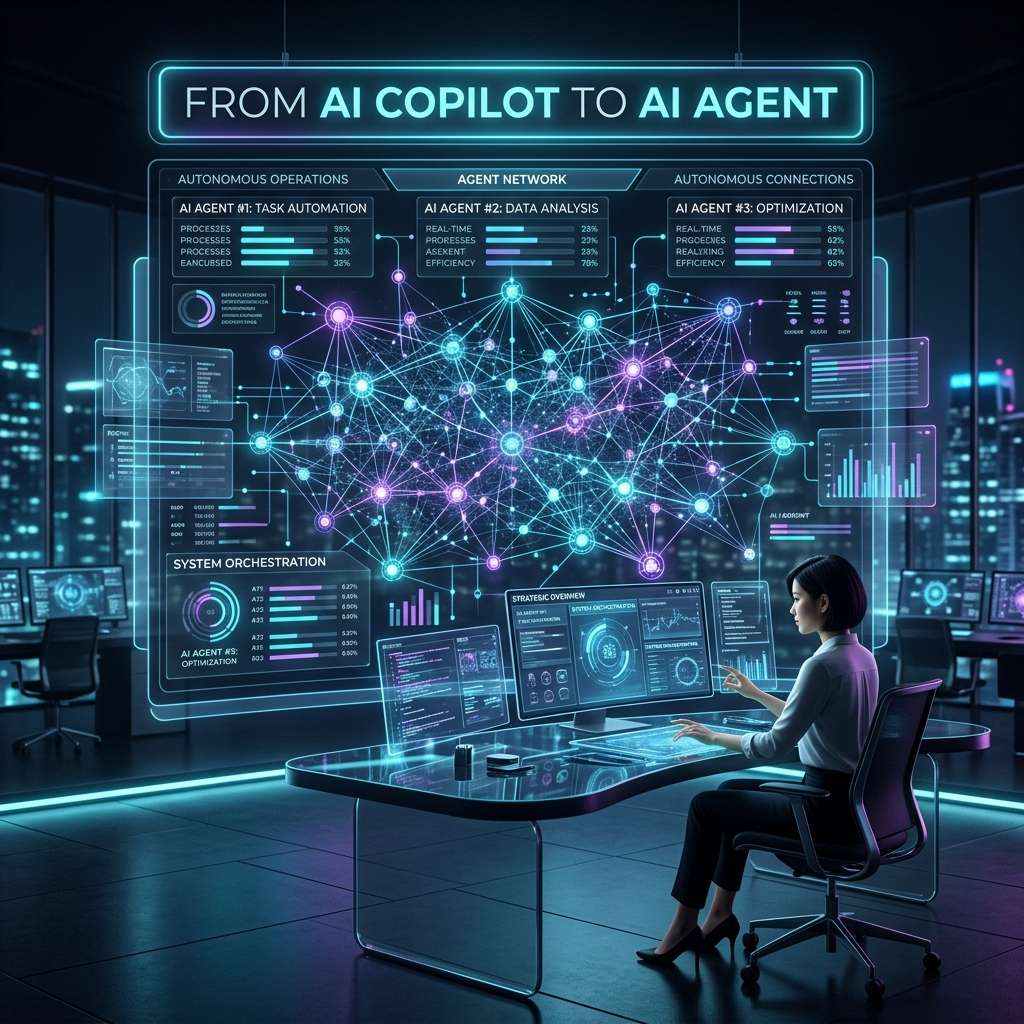
In the e-commerce and B2B sectors, the conversation has moved far beyond simple conversational chatbots that route users to FAQ pages based on keywords. The reigning trend in 2026 is "Agentic Commerce". This is an environment where AI systems can chain multiple steps, analyze historical data, and execute conditional actions autonomously on behalf of the company. Currently, AI agents boast an impressive 67% average resolution rate for customer service queries without any human intervention, and IBM estimates they can handle up to 80% of routine inquiries.
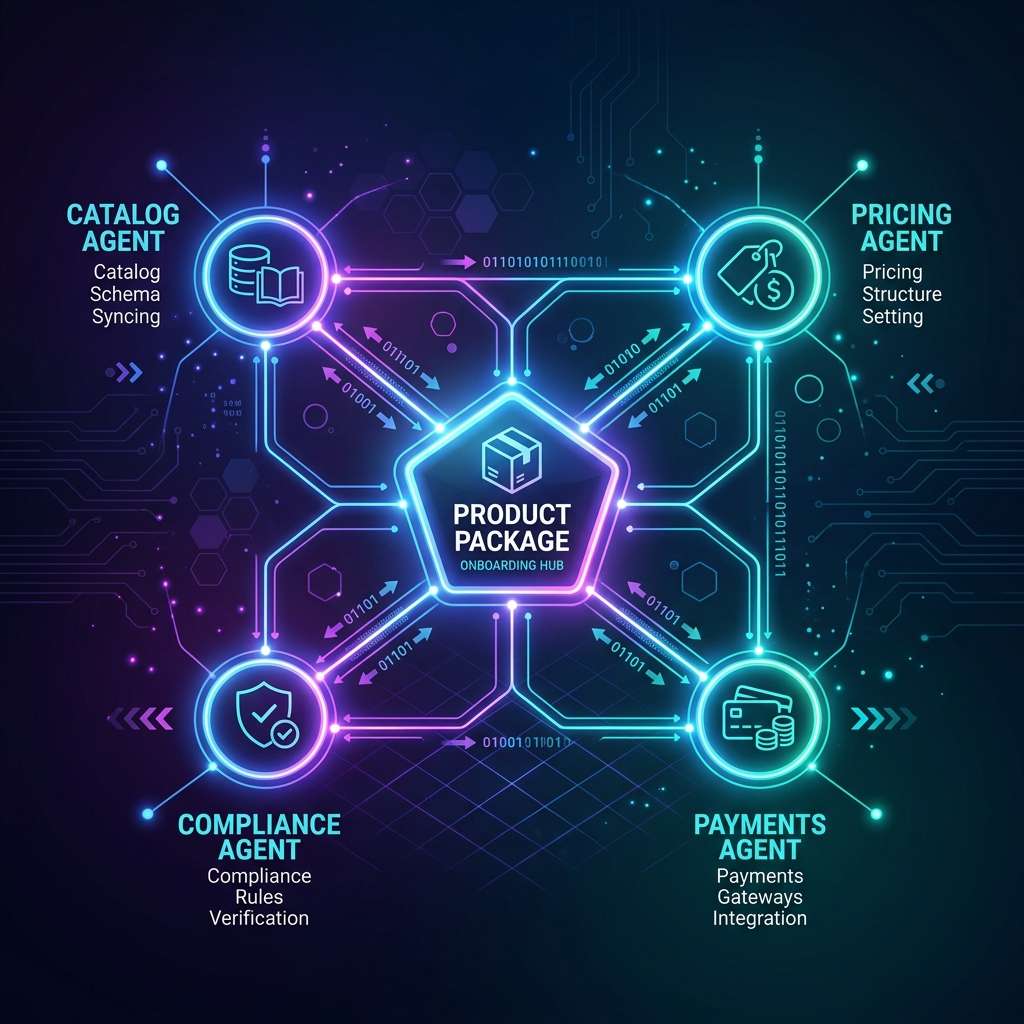
But the true architectural revolution is happening under the hood of B2B processes. We are moving from AI that merely assists people to software that behaves like an independent business entity. Instead of relying on fragmented productivity tools, modern companies are building AI-native operational layers. This includes Global Compliance Engines that continuously monitor cross-border tax legislation and proactively flag risks, as well as Fully Autonomous Finance Stacks for SMEs. These financial systems do more than just digitize invoices—they predict cash gaps, manage vendor payments, optimize tax liabilities, and actively negotiate procurement contracts in real time. Procurement decisions that once took weeks of analysis are now executed through thousands of game-theory simulations instantly. Meanwhile, in retail, AI is driving hyper-personalization and dynamic pricing strategies.
The Joy Paradox: When Work Gets Better, Yet Significantly Harder
This massive technological leap has highlighted a fascinating behavioral phenomenon that Boston Consulting Group (BCG) coined the "Joy Paradox" in their fourth annual 2026 AI at Work survey. The data, generated from nearly 12,000 employees worldwide, undeniably shows that 74% of frontline employees are now regular AI users, marking a massive 23 percentage point surge year-over-year.
The consequences of this adoption are twofold and seemingly contradictory. On one hand, 67% of regular AI users report a significant boost in day-to-day job satisfaction and enjoyment. Artificial intelligence removes the boring, repetitive, and tedious tasks from their workflow, effectively reducing daily toil. On the other hand, however, 41% of these same employees report a substantial increase in cognitive load and mental strain. For executives and leaders, this figure rises to a staggering 48%.
Why is this happening? When AI agents take over the "low-hanging fruit," human workers are left exclusively with the most complex, demanding edge-case problems. We are forced into roles of constant oversight, validating machine outputs (like checking for AI hallucinations), and making high-stakes conceptual decisions. Workers have rapidly shifted from being task executors to "orchestrators," which requires relentless focus and exhausts mental resources. Furthermore, the initial "honeymoon phase" with AI fades quickly; after six months, using AI stops bringing joy unless it is backed by clear strategic guidance and upskilling.
The Navigation Gap: Where Does the Saved Time Go?
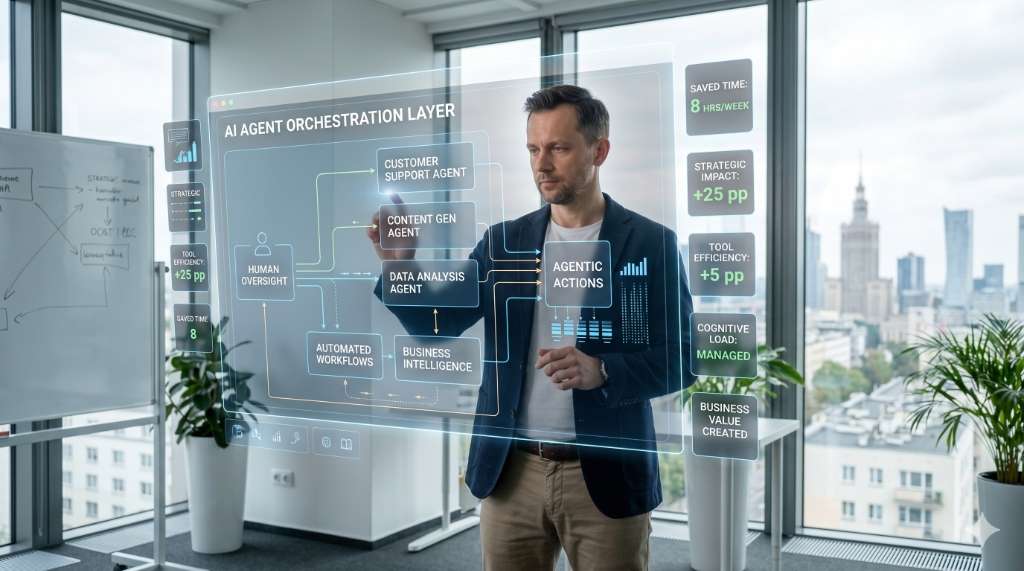
Another critical challenge is the Navigation Gap. AI tools genuinely work and deliver measurable results—42% of frontline employees save at least 8 hours a week. That is the equivalent of recovering one entire workday every single week. It sounds like a dream for any business.
Unfortunately, organizations are failing spectacularly at capitalizing on this newly freed time. According to the research, 66% of surveyed employees admit they receive limited or absolutely zero guidance from management on how to properly utilize their recovered hours. Consequently, more than half of them fail to redirect this time toward higher-value strategic tasks. Employees end up just "doing more of the same," or their freed-up potential dissolves into organizational inefficiencies. Only 33% of workers believe that leadership’s communication regarding AI is clear and understandable. Without crystal-clear strategic clarity from the C-suite, millions invested in software licenses will never translate into macroeconomic corporate gains.
The Digital Divide: SMEs Facing Multi-Speed Adoption
The challenge of deploying AI agents is particularly severe for small and medium-sized enterprises (SMEs). Eurostat data for 2025 reveals a dramatic 38 percentage point gap in AI adoption between large EU enterprises (55%) and small businesses (17%); the OECD reports a similar split across its member countries (52% vs 17%). The OECD, through its D4SME initiative, has identified this as a "multi-speed adoption pattern" and is urgently calling for dedicated policy interventions to level the playing field.
While large corporations have dedicated IT departments and massive R&D budgets for pilot testing, smaller players hit substantial structural blockers. The primary issue isn't the cost of the tools themselves, as platforms now offer affordable or even free entry tiers. The real bottleneck is data infrastructure debt. Up to 74% of organizations struggle to scale AI value precisely because of data quality issues—their data is uncleaned, siloed, and weakly governed. Furthermore, SMEs suffer from a chronic digital skills deficit; they invest heavily in tools but neglect to train the people expected to manage them.
Here, support systems are emerging. At a local level, programs like the "Digitalization of Lublin SMEs" (Measure 2.4 FELU in Poland) offer funding to implement advanced technologies like AI, edge analytics, and secure cloud systems. This proves that the capital required to bridge the SME technology gap exists, provided businesses are willing to apply for it and commit to deep transformation.
Practical Implementation: A Leader’s Checklist and the "AI Generalist"
If you want to successfully deploy AI agents, overcome the Joy Paradox, and achieve a tangible ROI, you must radically change your approach to management. Simply subscribing to another AI tool is a guaranteed path to failure. Based on 2026 predictions from PwC and other industry experts, here is what leaders must focus on:
- Change the Scoreboard: Stop measuring the sheer volume of AI usage or the number of licenses deployed. The real metrics of success are documented drops in customer acquisition costs, faster resolution times, and higher conversion rates. This is the "disciplined march to value" that will define the winners in 2026.
- Prioritize Strategic Clarity: The CEO and leadership team must actively lead the transformation. Define explicitly how your teams should spend their newly saved 8 hours per week. Do not leave it up to guesswork.
- Reshape Work End-to-End (Reshape vs Deploy): Do not bolt AI agents onto old, broken workflows. Redesign your core business logic from the ground up, acknowledging that algorithms can execute most intermediate steps faster and cheaper. Companies that reshape processes see a 24 percentage point increase in measurable business impact.
- Recruit and Empower "AI Generalists": Shift your hiring focus away from narrowly specialized roles. Instead, look for "all-around athletes"—adaptable generalists who can orchestrate and supervise the actions of multiple AI agents simultaneously. The AI engineer role is evolving into a coordinator of autonomous task networks.
- Enforce Responsible AI: As you delegate real decision-making power to machines, you must implement automated red teaming, security audits, and safeguards against hallucinations (such as RAG architectures) to restrict AI agents strictly to trusted company data.
In 2026, the question is no longer which Large Language Model you are using. The question is whether your data infrastructure is ready and whether you know how to strategically orchestrate your team's newly freed time. Understanding this is the defining line between leading digital innovation and becoming a relic of the past.
Sources
Comments
Comments are powered by Cusdis. The widget only loads after you click.