Multi-Agent Systems in Enterprise Commerce: How IFPOF Is Reinventing Product Onboarding
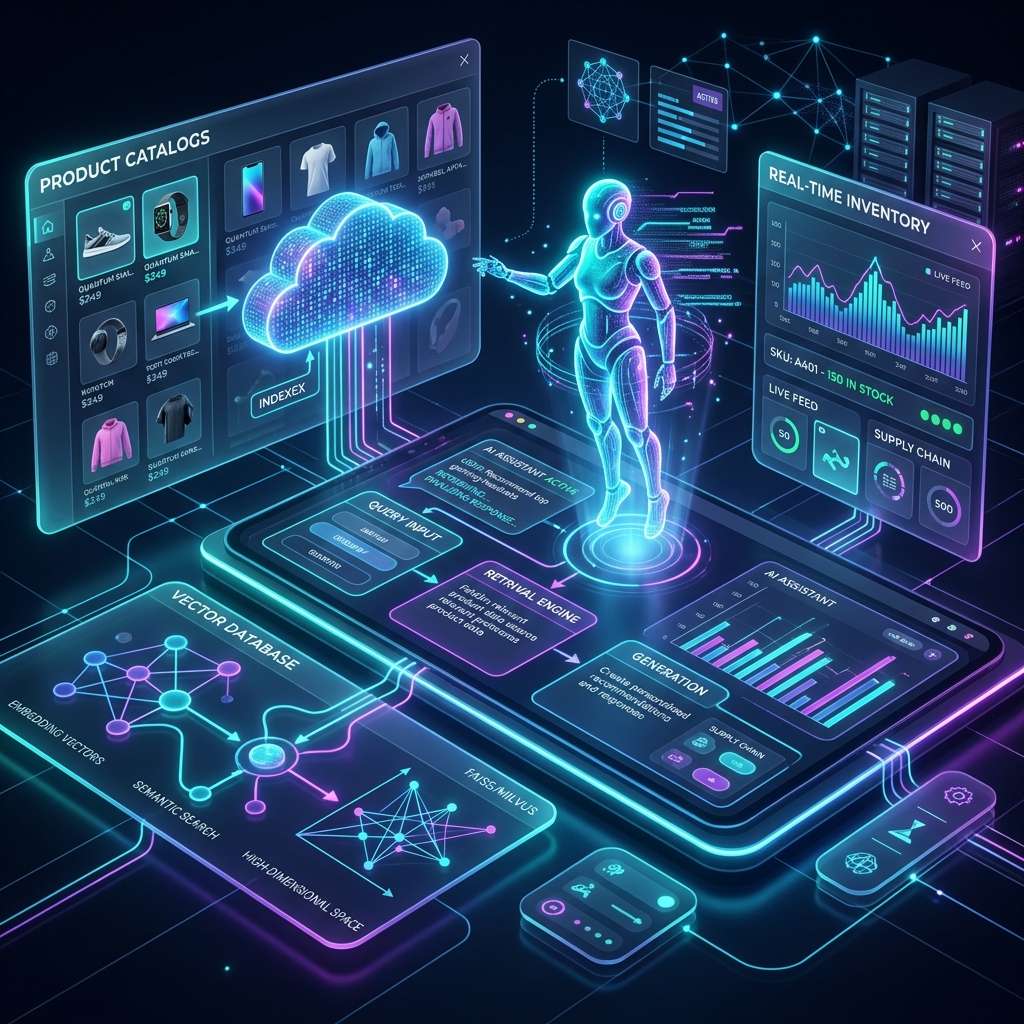
Anyone who has ever been part of a product launch at a large enterprise retailer knows what it actually looks like: dozens of handoffs between teams, countless emails and tickets, and a product that finally hits the shelf weeks late — because someone forgot to localize the price list for the DACH market, compliance rejected the product description, and the warehouse system was out of sync with the catalog. Traditional workflow automation doesn't fix this. Multi-Agent Systems do — and I had the chance to see this approach demonstrated at Data Science Summit AI Edition 2026.
Why Traditional Workflow Automation Fails
Classic workflow automation systems — BPMN, iPaaS, RPA — assume a linear world. Step A, then B, then C. But enterprise commerce product launches operate in a fundamentally non-linear environment: catalog, pricing, inventory, compliance, payments, localization — each domain has its own team, its own systems, and its own policies.
Problems emerge when:
- Data is incomplete mid-process — for example, customs regulations change halfway through onboarding
- Step ordering is flexible — compliance may block pricing, but not always, and not everywhere
- A single step failure brings the entire workflow to a halt with no recovery path
- Visibility is near-zero — you know something failed, but not exactly what, where, or why
The result is growing time-to-market and frustration across all involved teams.
What Is IFPOF — Intelligent Federated Product Onboarding Framework
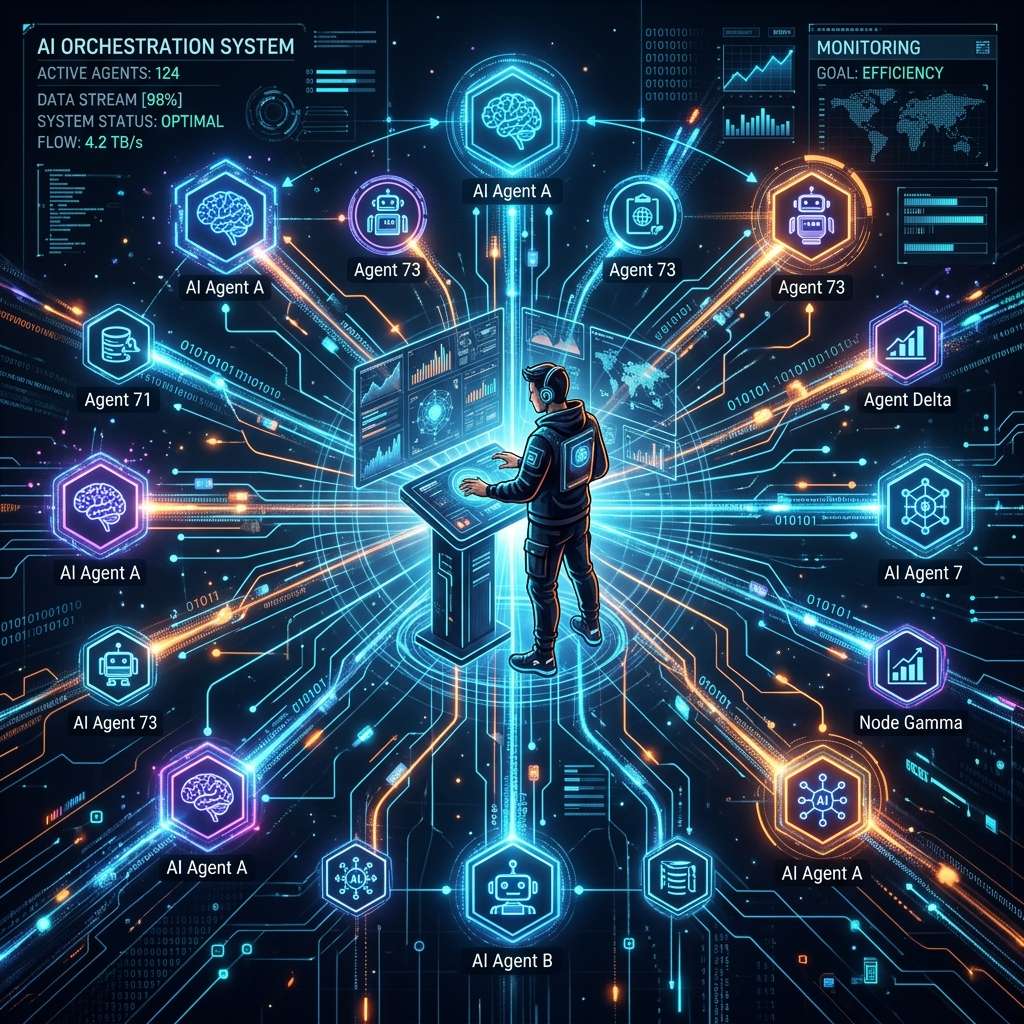
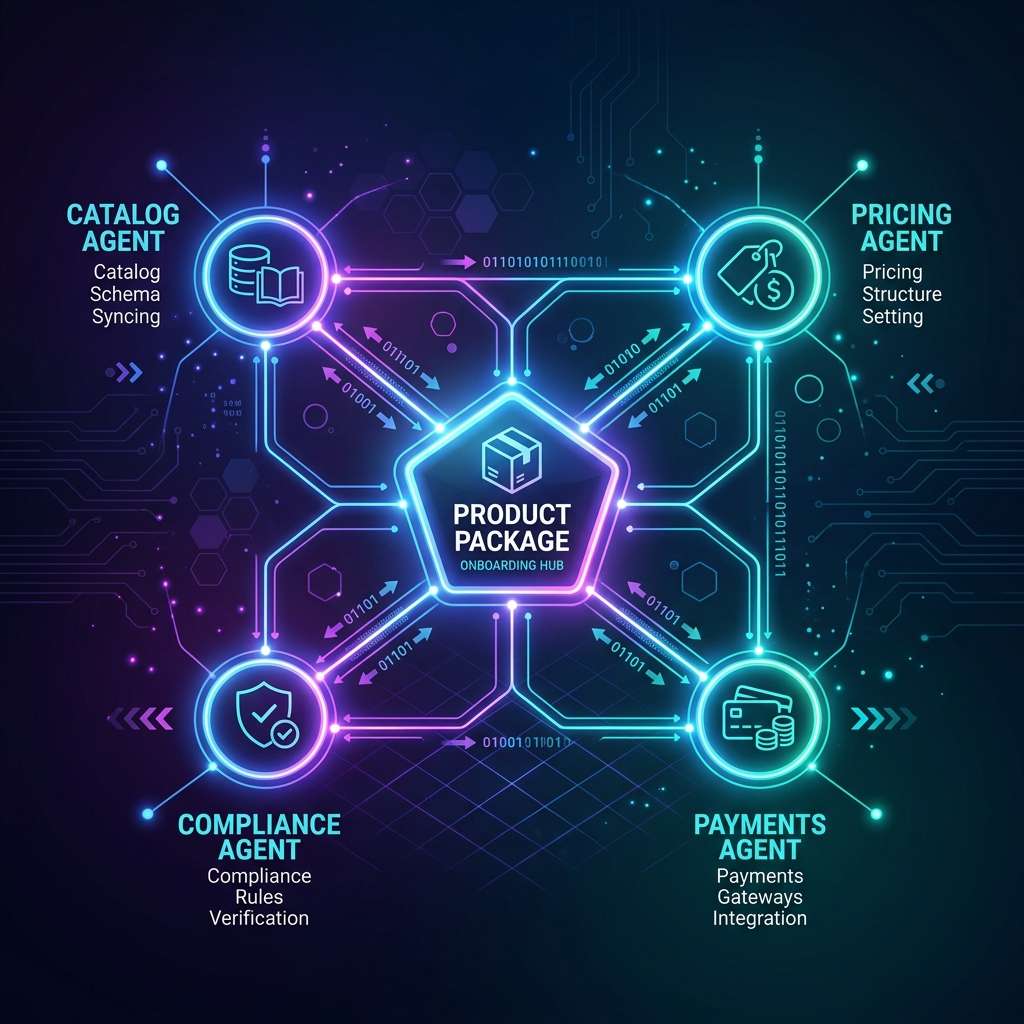
At the conference, Amit Kumar Padhy from Adobe Inc. presented an approach built on the Intelligent Federated Product Onboarding Framework (IFPOF) — an architecture that replaces a central workflow engine with a network of specialized, collaborating agents.
Key principles of IFPOF:
- Federation over centralization — each domain (pricing, inventory, compliance, etc.) has an autonomous agent that understands its domain and can make decisions independently within its scope
- Event-driven coordination — agents communicate through real-time events (event-driven architecture), not synchronous API calls
- Contract-first integration — each agent publishes a contract describing what data it needs and what it produces, before any code is written
- Capability-graph discovery — agents dynamically discover other agents' capabilities rather than being hardwired to each other
Production Patterns: What Makes This Safe and Scalable
What distinguishes IFPOF from an academic prototype is the set of production patterns that make the system safe and scalable.
Event-Driven Coordination
Instead of a sequential pipeline, agents subscribe to events. When the catalog agent completes product enrichment, it emits a product.catalog.enriched event. The compliance agent and pricing agent react independently and in parallel. Research shows that event-driven architecture reduces latency by 70-90% compared to polling-based approaches.
Saga-Style Compensation
Handling failures is the central challenge in distributed systems. IFPOF implements the Saga pattern: each local operation has a corresponding compensating transaction. If the payments agent rejects a payment configuration after the pricing agent has already approved prices, the system automatically triggers compensation — the pricing agent reverses its changes in a controlled, auditable way.
Step 1: Catalog Agent → product.created (OK)
Step 2: Pricing Agent → pricing.configured (OK)
Step 3: Compliance Agent → compliance.rejected (FAIL)
         ↓
Compensation: pricing.reverted + catalog.draft_restored
Decentralized Execution, Centralized Policy Enforcement
This is one of the hardest balances to achieve. Agents act autonomously within their domains, but all decisions are subject to centrally governed policies (governance layer). For example, the localization agent may independently translate product descriptions, but cannot publish them to an EU market without passing through an AI Act compliance policy.
Trust Layer and Immutable Decision Trails
Every agent decision is recorded in an immutable log with full context: what the agent knew at the time of the decision, what inputs it received, which policy it applied and why. This enables a full audit trail — a critical requirement in regulated industries.
Human-in-the-Loop: Where Human Judgment Remains Essential
A multi-agent system does not eliminate humans from the process. On the contrary — it precisely defines where human intervention is genuinely needed. IFPOF implements decision routing based on two criteria:
- Risk score — decisions with high business or regulatory risk are routed to a human
- Confidence score — when an agent has low confidence in its decision, it escalates to a human
The result is a significant reduction in manual handoffs while maintaining full control over high-risk decisions. According to Moody's research, 42% of risk and compliance professionals consider human oversight mandatory — not optional.
Results and Implications for Practitioners
The IFPOF approach enables measurable outcomes:
- Faster product launches — parallel processing by specialized agents shortens time-to-market
- Less manual reconciliation — agents detect inconsistencies earlier than traditional systems
- Better failure transparency — instead of "the workflow stopped," you get precise information: which agent, at which step, with what context
- End-to-end observability — every event, every decision, every compensation is visible and measurable
For practitioners, the incremental approach is key: there's no need to rewrite everything from scratch. IFPOF can be deployed domain by domain, replacing successive fragments of traditional workflow with agentic execution.
How to Start: A Practical Checklist
If you want to modernize your commerce onboarding toward multi-agent architecture, start with these steps:
- Map your current-state workflow — identify all domains, handoffs, and failure points
- Identify a pilot domain — choose one area (e.g., catalog enrichment) for your first agent
- Define integration contracts — before writing code, establish event schemas and policies
- Implement observability from day 0 — every event must be logged with decision context
- Design compensations for every step — before deployment, decide what happens when a step fails
- Establish human-routing thresholds — risk score and confidence score must be defined before production
A Paradigm Shift: From Workflow Management to AI-Native Operating Model
What Padhy's presentation describes is something more than a new tool or framework. It's a fundamental shift in how enterprise automation is conceived: from "we manage workflows" to "we operate on an AI-native model, where agents execute and humans govern."
In 2026, multi-agent systems are no longer an experiment. According to Gartner, 40% of enterprise applications will integrate task-specific AI agents by end of 2026, up from less than 5% not long ago. Commerce onboarding is one of the most natural areas for this transformation: high complexity, multiple domains, clear success metrics (time-to-market, error rate, compliance rate).
The question is no longer "whether to deploy agents," but "which domain to start with and how to build governance that survives a regulatory audit."
Sources
- Amit Kumar Padhy, Adobe Inc. — "Intelligent Commerce Onboarding: Multi-Agent Systems for Coordinating Product Launches", Data Science Summit AI Edition 2026
- Confluent Blog — "Four Design Patterns for Event-Driven, Multi-Agent Systems" (2025): https://www.confluent.io/blog/event-driven-multi-agent-systems/
- Atlan — "Event-Driven Architecture for AI Agents: Patterns and Benefits" (2026): https://atlan.com/know/event-driven-architecture-for-ai-agents/
- Microsoft Azure Architecture Center — "Saga Design Pattern" (2025): https://learn.microsoft.com/en-us/azure/architecture/patterns/saga
- Moody's — "Human in the loop: Why human oversight still matters in AI-driven risk and compliance" (2025): https://www.moodys.com/web/en/us/insights/ai/human-in-the-loop-why-human-oversight-still-matters-in-ai-driven-risk-and-compliance.html
- Druid AI — "Agentic AI trends 2026: How multiagent systems redefine enterprise operations" (2026): https://www.druidai.com/blog/agentic-ai-trends-in-2026
- Gartner via Neomanex — "7 AI Agent Capabilities You Can Buy in 2026" (2026): https://neomanex.com/posts/agent-capabilities-menu
- Strata.io — "Human-in-the-Loop: A 2026 Guide to AI Oversight" (2026): https://www.strata.io/blog/agentic-identity/practicing-the-human-in-the-loop/
Comments
Comments are powered by Cusdis. The widget only loads after you click.